Fomi
- 3.6
- Rating
- 1.00M
- Installs
- Free
- Price

 Analysis by App-foxy
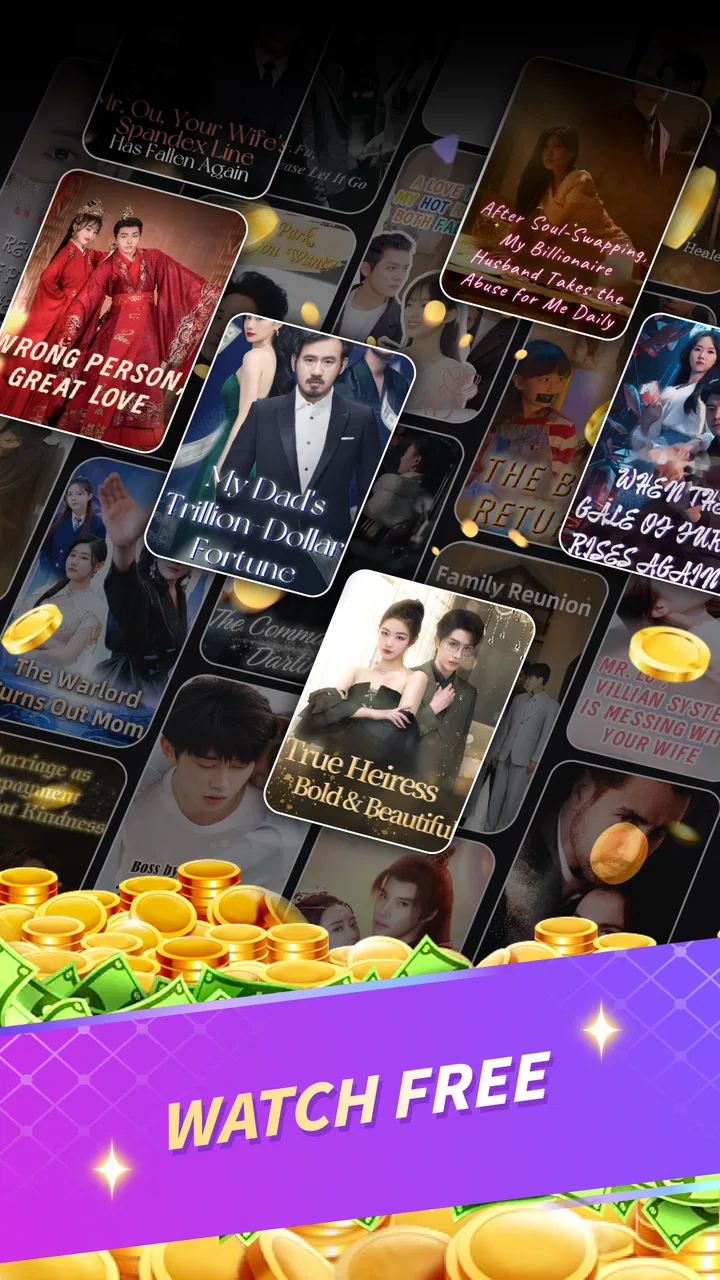
Fomi is a short-drama viewing app from Vm Entertainment that I approached less like a general video player and more like a quick creative break: open it, find a compact story, and decide whether it deserves a few spare minutes. Its store summary points to popular short dramas and a watch-and-earn angle, while the short description simply identifies it as Fomi. That combination makes the app sound straightforward, but the real question is whether it fits the way you actually consume video.
After spending time with it, my impression is mixed in a useful way. Fomi is easy to understand if you enjoy serialized, mobile-first drama and prefer small viewing sessions. It is less convincing if you want a full editing workspace, a conventional streaming library, or a carefully organized archive of long-form shows. The app sits in the video players and editors category, but its practical identity is much closer to a short-form entertainment destination than to a tool for producing your own videos.
The app is free to use, carries a Teen content rating, and has reached more than a million installs. Its average rating is 3.6 from roughly twenty-two thousand ratings, which tells me that interest is substantial but the experience is not universally smooth. I would treat that score as a reason to set realistic expectations rather than as an automatic warning. Fomi can be enjoyable when its quick-drama format matches your habits, but it is not the kind of app I would recommend blindly to every viewer.
You May Also Like

 Blood Strike: 2.5 Anniversary
Blood Strike’s Loadouts Turn Every Drop Into a Tactical Gamble
A close look at Blood Strike’s custom loadouts: how fast access to signature weapons reshapes its battle royale rhythm, rewards preparation, and narrows the gap between fights.

 Pandora - Music & Podcasts
Pandora’s Music Is Easy to Start, but Harder to Recover
Pandora’s strength is its low-effort path from a seed to a station. Its weak spot is how much confidence it asks you to place in connection, setup, and quiet recovery.

 8 Ball Pool
 Is Built on Rivalries, Rematches, and Routine
A close look at the rivalries, rematches, shared routines, and unanswered safety questions that turn a quick pool match into a persistent mobile community.

 Samsung Music
’s Quiet Strength Is Playing What You Already Own
Its reach comes less from spectacle than from dependable access to a personal library. That simplicity is both the app’s strongest retention engine and its ceiling.

 AccuWeather: Weather Radar
AccuWeather Review: A Quick, Clear Forecast for Everyday Decisions
For everyday plans, the best forecast is the one you can understand quickly. AccuWeather makes rain timing, radar, and local conditions easy to act on, with a few trade-offs.

 Hill Climb Racing
Why Hill Climb Racing Still Turns Crashes Into One More Run
A tiny car, a bumpy hill and one more upgrade: Hill Climb Racing keeps resurfacing because its simple chaos makes every near-miss feel personal.
More From Our News Desk



Starting with the right kind of short drama
I use this section to focus on the kind of story that makes short-drama viewing worthwhile: a clear central conflict that can hold my attention in a brief session. I also consider how to sample a title without mistaking a bold opening hook for a promise that the whole series will suit me.
What Fomi is really for
The best way to begin with Fomi is to think in terms of attention windows. I found the app more suitable for a commute, a lunch break, or the few minutes before bed than for replacing a traditional television service. Short dramas are built around immediate hooks, quick emotional turns, and the promise that another episode will not demand a large block of time. That makes the app approachable, especially when I want a story rather than an endless stream of unrelated clips.
There is also a practical difference between opening Fomi with a specific show in mind and opening it simply to browse. If you already like compact romantic, dramatic, or suspenseful serials, the format gives you a clear reason to stay. If you expect a broad catalog with familiar mainstream productions, the experience may feel narrower. I would not install it expecting the same role as a major subscription platform or a local video editor.
The watch-and-earn positioning deserves a little caution in how you interpret it. I see that idea as an engagement layer around viewing, not as a substitute for income. Anyone considering the app should approach rewards as a possible extra motivation for watching, not as a reliable financial benefit. In practice, the story itself should be the reason to use Fomi; if the reward mechanism is the only attraction, the app may quickly feel like work.
A useful first-session routine
My preferred starting routine is simple: browse several titles, sample the opening of one or two, and notice which presentation style feels easiest to follow on a phone. I would avoid committing immediately to the first dramatic thumbnail. Short-form catalogs often rely heavily on strong visual hooks, and a striking cover does not necessarily mean the pacing will suit you.
It also helps to decide how you want to watch before beginning a series. If you have only a few minutes, choose something that can be paused without losing the thread. If you have a longer break, let the opening episodes establish the characters before judging the whole production. This small change prevents the common mistake of rejecting a series because its first moments are designed mainly to set up a cliffhanger.
For parents and younger viewers, the Teen label matters. I would not hand the app to a child without checking what appears in the particular dramas being watched. The age rating gives a useful boundary, but personal supervision is still sensible when the phone is shared with younger family members.
Where it fits beside familiar alternatives
Compared with a mainstream streaming app, Fomi is more focused on quick serial viewing and less suited to a relaxed evening built around a film or a long episode. Compared with a social video feed, it should offer a stronger sense of continuing narrative, although the short format can still encourage rapid browsing between titles. Compared with an actual mobile editor, it is aimed at consuming creative work rather than cutting clips, adding transitions, or preparing a finished file.
That distinction is important for creators. If you are searching for a way to make a short drama, publish your own vertical series, or manage a production from script to delivery, Fomi is not the right primary tool based on its role as a viewing app. It can be useful as reference material: I would study how quickly a scene establishes conflict, how episodes end, and how much information fits into a small screen. But the making process would need to happen elsewhere.
From viewing to creative workflow
Here I shift from watching for fun to watching with a creator’s eye, looking at how compact episodes introduce conflict and sustain curiosity. A simple note-taking habit can turn a casual session into useful reference, while keeping Fomi in its proper role as a place to watch rather than a tool for making or delivering finished video.
Using short episodes as a creative starting point
Fomi becomes more interesting when I use it as a reference library for storytelling rather than just background entertainment. Short dramas force creators to make decisions quickly. A character usually needs a recognizable problem early, a scene has to communicate without long explanations, and the ending must create enough curiosity to encourage another view. Those are useful lessons for anyone making reels, promotional clips, serialized fiction, or short social videos.
One practical exercise is to watch an episode once without pausing, then replay it while noting the first moment that makes the conflict clear. I would also mark where the emotional emphasis changes. This reveals the difference between a scene that merely moves fast and one that actually controls attention. The exercise is more valuable than copying the surface style, because it helps you understand timing, escalation, and payoff.
A second useful exercise is to compare the opening and closing moments of several dramas. Look for the information each opening gives you, what it deliberately withholds, and whether the ending resolves anything or simply opens another question. That comparison can guide your own storyboards. It is a concrete benefit of Fomi that a generic video feed does not provide as consistently: the episodes are connected, so pacing can be studied across a sequence rather than in isolated clips.
Making a viewing plan instead of endlessly scrolling
The main friction I noticed with short-form entertainment is not technical complexity; it is the ease of losing track of time. A watch-and-earn design can make that pull stronger because viewing may feel connected to another goal. My solution is to choose a small viewing window before opening the app and stop at a natural episode break. That keeps Fomi useful during a short pause instead of turning it into an unplanned session.
For a creator, this same habit improves analysis. Rather than consuming a whole series passively, I would assign each session a question: how is the lead introduced, how does the dialogue carry exposition, or how does the episode create a reason to continue? One focused question produces better creative notes than watching several episodes and remembering only the general mood.
For an ordinary viewer, the trade-off is more personal. The compact format is convenient, but it may also make stories feel compressed. If you prefer slow character development, detailed world-building, or uninterrupted cinematic scenes, the short-drama structure may feel hurried. In that situation, a conventional streaming service is the better choice, even if Fomi is free.
Iteration: deciding what deserves another chance
Short dramas often reveal their strengths gradually, but I do not think every title deserves unlimited patience. My approach is to give a series enough time to establish its central conflict, then judge whether the characters and pacing are working for me. If the only reason to continue is the promise of another cliffhanger, I would move on. The app is most enjoyable when the momentum comes from genuine curiosity rather than from repeated interruption.
That judgment also applies to the app itself. If browsing feels more rewarding than watching, I would treat that as a signal to narrow my choices. Pick one title, watch with sound and attention, and see whether the story holds together. This is a better test than measuring the app by how many thumbnails it can present.
Another trade-off concerns repetition. Short-drama services can make familiar emotional patterns feel immediately accessible, which is part of their appeal. At the same time, viewers who want unusual structures may find the formula predictable. I would recommend Fomi to someone who enjoys recognizable dramatic setups with quick payoffs, but I would steer a viewer seeking experimental cinema toward a broader platform.
What creators can learn without mistaking the app for an editor
Because Fomi appears in a category associated with video players and editors, it is worth being precise: I would not use it as the production stage for my own project. There is no reason to treat the app as a replacement for a timeline editor, camera workflow, captioning tool, or publishing dashboard. Its value for creators is observational. It lets you examine finished short-form storytelling in the environment where an audience is likely to consume it.
That makes Fomi useful during the reference phase of a project. Before writing a short series, I could sample several dramas and record practical observations: how much context is delivered before the first turn, whether dialogue or visuals carry the scene, and how often the story asks the viewer to wait for information. I would then take those notes into a separate writing and editing workflow. This separation prevents a common mistake: confusing a good viewing reference with a complete creation tool.
Handoff and delivery expectations
For viewers, the handoff is simply the move from one episode to the next or from browsing back to the wider catalog. I value a service more when that transition feels intentional, because short sessions depend on finding the next useful action quickly. With Fomi, I would keep expectations modest and focus on whether the app helps me return to a story without unnecessary searching.
For creators, however, Fomi is not where I would expect to finish and deliver a project. If my goal were to publish a completed short drama, I would prepare the video, captions, cover art, metadata, and final upload through tools designed for those jobs. Fomi can inform decisions about mobile presentation, but it should not be treated as the final delivery pipeline.
This is also why the app may not satisfy professional editors or small production teams. They need control over files, versions, revisions, audio, and approvals. A viewing app can inspire those decisions, but it cannot replace the organized handoff required when several people are preparing creative work for release.
Version, access, and everyday practicality
Fomi currently appears as version 1.2.5 and requires Android 8.0 or later. That makes compatibility fairly approachable for people using an older but still supported Android phone. Before installing, I would still check the device’s available storage and make sure the operating system meets that requirement, particularly if the phone is shared or has limited room.
The app is free, which lowers the barrier to trying it. Free access is especially useful here because the format is personal: one viewer may enjoy several short dramas in a single sitting, while another may discover that the compressed storytelling is not a good match. I would test it during a normal break rather than judging it only from the description.
The Teen rating should be part of that decision, not an afterthought. If you are selecting entertainment for a family tablet, review the app together and decide whether its themes suit the intended viewer. For personal use, the rating is a reminder that “short” does not automatically mean light or child-friendly.
Who should install it, and who should skip it
I would recommend Fomi to viewers who enjoy serialized drama, like discovering stories in small portions, and are comfortable with a mobile-first presentation. It is also worthwhile for aspiring short-form storytellers who want to study hooks, cliffhangers, and compact scene structure. The free entry point makes experimentation easy, and the large install base suggests that the format has found a meaningful audience.
I would skip it if my main goal were editing my own footage, managing a production, or exporting polished creative work. I would also choose another service if I wanted a deep long-form catalog, family-oriented programming, or a viewing experience built around films and full-length episodes. The app’s strengths become weaknesses when the short-drama format is not what I came for.
My final recommendation is therefore conditional but positive. Fomi works best as a focused short-drama companion, not as an all-purpose video toolbox. I like the idea of using it in brief sessions, and I find its format genuinely useful for studying mobile storytelling. Still, the middling average rating and the natural limitations of compressed serial drama mean I would approach it as a free trial rather than a guaranteed favorite.
For my own routine, I would install it when I want quick fictional episodes or creative reference, choose titles deliberately, and keep the watch-and-earn element in perspective. If the stories hold my attention without the reward angle doing all the work, Fomi earns a place on my phone. If I need editing, professional delivery, or richer long-form viewing, I would move to a dedicated alternative instead. That is the clearest way to understand Fomi: a convenient destination for short dramatic viewing, with useful lessons for creators, but not a substitute for the tools that actually make and deliver video.
FAQs for Fomi
01What is Fomi and what can I use it for?
Fomi is a versatile app designed to enhance photo editing and sharing experiences on both Android and iOS devices. It offers a wide array of features, including filters, stickers, and text overlays, allowing users to creatively customize their photos. Ideal for personal use or social media enthusiasts wanting to add a unique touch to their images.
02Is Fomi free to download and use?
Fomi is available as a free download on both the Google Play Store and the Apple App Store. While the app offers a variety of free features, there are in-app purchases and a premium subscription option, which provide access to additional tools and exclusive content for enhanced photo editing capabilities.
03What are the main features of Fomi?
Fomi boasts a range of features such as advanced filters, a variety of customizable stickers, text overlays, and the ability to directly share edited images to social media platforms. It also includes tools for adjusting brightness, contrast, and saturation, making it a comprehensive solution for both novice and experienced photo editors.
04Does Fomi require an internet connection to function?
While Fomi does not require an internet connection for basic photo editing, accessing some features like downloading new content or sharing photos directly to social media will require internet connectivity. Additionally, syncing across devices through cloud storage options may also necessitate an online connection.
05Is Fomi suitable for beginners in photo editing?
Yes, Fomi is designed with user-friendliness in mind, making it suitable for beginners. The intuitive interface, coupled with easy-to-use tools and tutorials, ensures that even those new to photo editing can navigate the app effectively and create stunning visuals with minimal effort.
Pros
- User-friendly interface for easy navigation.
- Extensive library of customizable templates.
- Regular updates with new features.
- Offline access for convenience.
- Seamless integration with other apps.
Cons
- Limited free version features.
- Occasional ads can be intrusive.
- Requires internet for some functionalities.
- Premium subscription can be pricey.
- Some templates require in-app purchases.

Gallery